

Amanda Talavera is a dark fantasy author whose excerpt, Collapse Beneath Black Waters – The Omen, impressed me with its unflinching psychological intensity. Rather than presenting monsters as creatures to be feared, her fiction explores the darkness within ordinary people, asking whether guilt, rage, trauma, and love can coexist inside the same soul.
In this interview, we discuss dark fantasy, trauma, empathy, monsterhood, queerness, anime, AI, morality, the publishing industry, and why the most terrifying monsters are often the most deeply human.
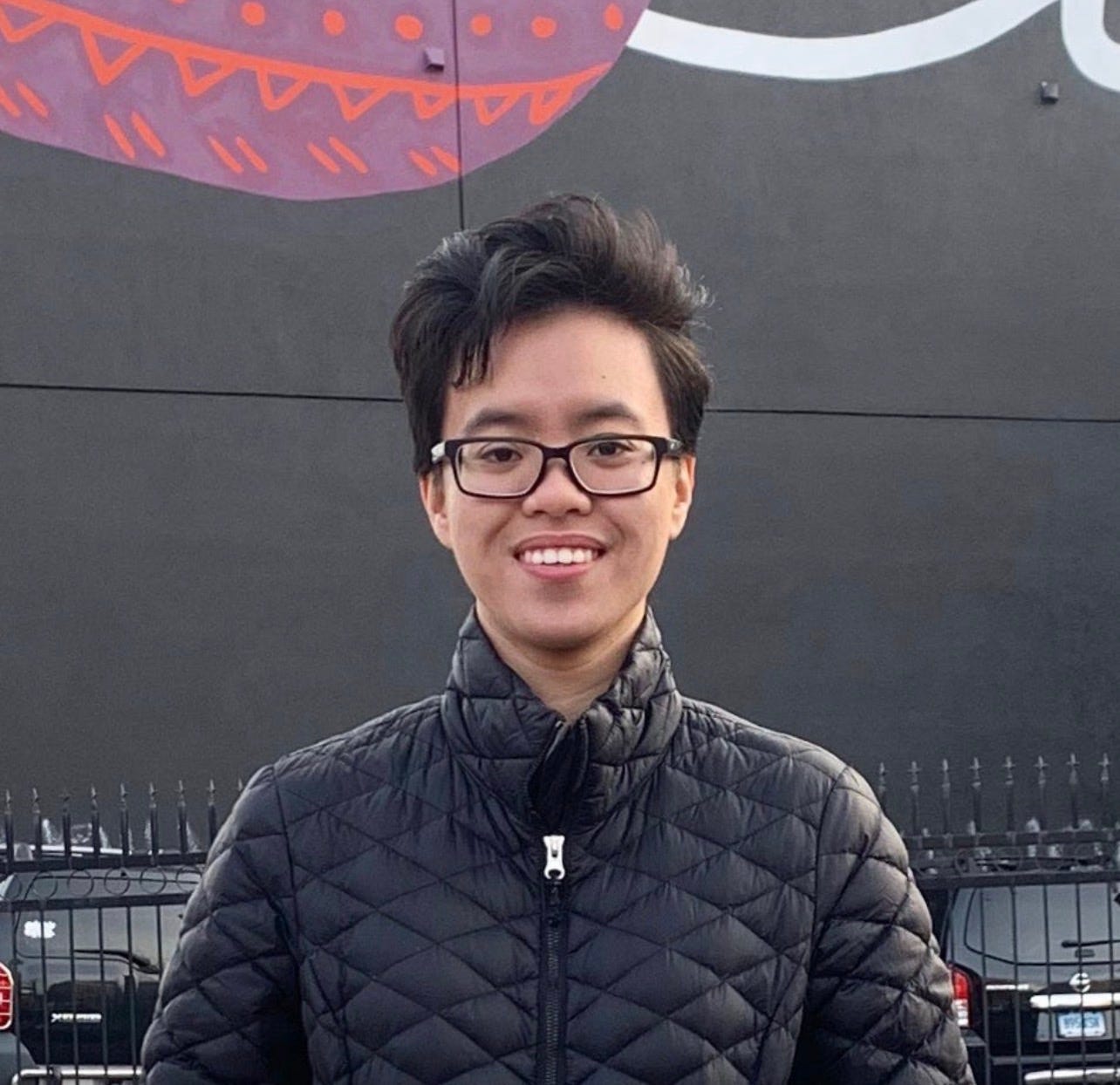
The author:
Amanda Talavera was born and raised in Los Angeles, California. She spent much of her childhood attending Christian schools, as her parents wanted her to receive the best education possible. Although she was grateful for their support and sacrifices, Amanda struggled to fit in with her peers, especially after coming out as a lesbian. Her early experiences of loneliness helped shape her worldview and would later influence her creative work.
Today, Amanda writes dark fantasy and poetry that explores themes of monsterhood, love, queerness, ambition, and loneliness. She is obsessed with one question: if we’re monstrous, can we accept ourselves and still be capable of good?
Thanks for doing this interview, Amanda.
I really enjoyed reading your work. I was especially struck by the psychological darkness running through your protagonist—the way guilt, fear, rage, self-loathing, and desperation all seem to churn together inside his head in quite a claustrophobic manner. Where exactly does that sensibility come from?
I’m glad you enjoyed reading my work, and thank you for such a thoughtful question.
Every day, I always try to see the good in people, even when it can be difficult. I know that may be naive and, in some ways, a flaw in itself, but it’s something I want to explore in my writing.
When I began writing about my protagonist, Malakai, I wanted to introduce him as an unstable teenager with a warped understanding of morality. Yes, he’s violent, no doubt—and I didn’t want to sugarcoat what he did. However, I wanted to go past that exterior and allow readers to see his loyalty for his loved ones, his fears, insecurities, and vulnerabilities. Anything that makes him human. I think it’s so fascinating when the monsters we are supposed to be afraid of reveal themselves to be entirely human underneath.
That leads into my next question—what’s the core aim of your fiction? What are you trying to make the reader feel, confront, or experience? What gap are you trying to fill?
Empathy and understanding. I want my readers to sit with my characters who are capable of committing violent and selfish actions, yet find the humanity within them. Perhaps, if we were in their shoes, we might do the same. By doing so, how can we accept ourselves? How can we redeem ourselves and break the cycle of trauma? These are questions I hope my readers will take from my work.
As a writer, who are your biggest influences?
Batman: The Animated Series
Tupac Shakur, an acclaimed American rapper
Star Wars Episodes I - VI by George Lucas
The Walking Dead comic series by Robert Kirkman
The Walking Dead: The Telltale Series video game
Berserk by Kentaro Muira
Naruto and Naruto Shippuden by Masashi Kishimoto
One Piece by Eiichiro Oda
What’s your opinion on modern literature as it currently stands?
I have a somewhat mixed opinion on modern literature, particularly within the publishing industry. I’ve been reading self-published books lately, and I’m amazed by the talent and creativity by many indie authors. It saddens me that they do not get much recognition and prestige compared to traditionally published authors.
Still, I’m glad that literature is so accessible nowadays. Indie writers, especially, have the space and freedom to write what they want, and readers can find their work directly.
And what about the age we live in more broadly? Does the world feel stranger to you lately? More unstable? More surreal?
As I observe the state of the world, I feel that it’s shifting very quickly, and people do not know how to respond to that change. For example, I see the benefits and risks of AI, but its advancement sometimes feels too fast for us to adapt.
More broadly speaking, the shift of culture, education, technology, and politics have left me feeling uncertain about the future. In turn, that has made me believe the world is currently unstable.
What are your biggest hopes and fears for the future of our civilisation?
Although I’m glad that many people are outspoken about their beliefs, even if they differ from another, I’m afraid that this will also lead to division. My hope is that people will continue to advocate and fight for what they believe in, but also learn to listen and engage with those that disagree with them. Literature is so important nowadays because it fosters empathy amongst readers, which in turn leads to intellectual discussions. At its best, it will allow us to step into the shoes of those who have had different experiences in the world.
What’s the greatest moment in your life been so far?
Finding my community, particularly my best friend and my professors, who continuously support and encourage me to go after my aspirations. I was a lonely kid throughout my childhood, so I’m deeply grateful for anyone who has made me feel seen and recognized.
What’s the most challenging one been? And what did you learn from it?
Life after graduating university. It was difficult adjusting to the next stage in life—the real world. The job market was, and is still, challenging, and I immediately felt like a failure. Over a few months of depression and inactivity, I eventually realized that I cannot avoid this storm of uncertainty. I had to walk through it to find direction again. During that time, I became an English tutor and participated in community service activities to keep myself busy. That helped clarify my goals. I realized I would like to be a social worker, and I’m planning to apply for Master of Social Work programs in Fall 2026.
How do you balance your creative ambitions with the rest of your life?
As someone who can easily burn out from my creative projects, I usually write three nights a week, so that I have enough time to rest, recharge, and spend time with loved ones. If I write every single night, I know that my creative projects will turn into an obligation, and I don’t want to lose my love for storytelling and poetry. Also, I believe having a balance between creative ambitions and personal life is essential. I try not to tie my entire identity to my work, which allows me the space and freedom to observe and experience the world more fully.
If someone discovered you through this interview, what’s the one piece you’ve posted on Substack that you’d point them toward first?
I would direct readers to my dark fantasy excerpt, Collapse Beneath Black Waters - The Omen. I’ll be developing the story into a serial. It takes place in a society where magic is inherited through bloodlines and controlled by arranged marriages. As a result, people are often treated like political assets or cast out as outcasts by nature. Malakai is a product of this flawed society, and I want to explore more of its consequences through the other characters and their perspectives.
Alright—you get the last word. How would you like to sign off? What would you want to say to the people reading this?
I am grateful for anyone who chooses to read and engage with my work. Like a lot of writers, one of my fears is that my work will never be read. So, it means a lot to me when someone takes the time to sit with it. I hope my stories stay with readers and perhaps help them find something that they’ve been searching for. Thank you for reading.
If Amanda’s answers resonated with you, be sure to subscribe to her Substack and do go check out “Collapse Beneath Black Waters - The Omen”. There’s a lot more going on beneath the surface than we could ever cover in a single interview.
Besides, now it’s your turn.
Which of Amanda’s answers struck you hardest? Which did you agree with? Which did you disagree with? And what question do you wish I’d asked?
Drop your thoughts below and let’s give Amanda a proper grilling in the comments. ↓
Thank you Tiberius!😁
I think you have a very smart approach to your life balance. Protecting you energy and creativity by not overindulging is a concept I may have to put into my own approach. And I agree with Cello up top, BTAS as a literary inspiration is a good pull, and I am keen to give your work a read. Great interview!